
Have you ever heard of June bugs? I have herd of people with the nickname “Junebug,” but I did not know there was an actual bug named “June Bug.” Keep reading and I will tell you all about it. Thanks to Google Gemini for helping me identify some common and uncommon bugs. I am not a fan of bugs, so this list mostly has common names. I did not want to dig too deeply into different kinds of bugs. I find them creepy and try to avoid them whenever possible. Tell us in the comments about any bugs you love or hate. For example, I hate spiders. I would NEVER own a tarantula as a pet!
Within this blog, I will be referencing characters from A Bug’s Life.
A – Ant: “Tiny, social insects known for their incredible strength and highly organized colonies.” Maybe I would like to own an anteater. Haha. I have seen so many kinds of ants in my life; red ants, fire ants, black ants, carpenter ants, flying ants, etc. Let me know in the comments what kinds of ants you have encountered. Anthills are the worst. However, Flik, Dot, and Princess Atta are too cute!
B – Beetle: “The largest group of insects, recognizable by their hard, shell-like forewings.” Every time I hear the word “beetle,” I think of the blue beetle (Dim) in the movie A Bug’s Life. Let me know in the comments if you have seen that movie. It was fun! Tuck was the funniest beetle!
C – Caterpillar: “The larval stage of butterflies and moths, known for voraciously eating leaves.” Caterpillars are ok, but they are much more beautiful as butterflies. Heimlich is the funniest caterpillar I have ever seen! When he turned into a butterfly at the end, he was so proud of his little wings! It was hilarious!
D – Dragonfly: “Fast-flying aerial predators that hover and dart with large, transparent wings.” I like watching dragonflies darting about. One at a time, of course
E – Earwig: “An insect easily identified by the distinctive, pincer-like appendages on its abdomen.” This is a gross insect that I would not like to encounter. It reminds me of a roach and has a claw for a butt, so I would rather avoid it.
F – Firefly: “Beetles that produce a chemical glow to communicate and attract mates.” We used to catch fireflies in a glass jar when I was little. Have you ever done that? Their glow is very pretty at night. I think the firefly was the inspiration for the glow worm.
G – Grasshopper: “Powerful hoppers equipped with large hind legs for jumping long distances.” I prefer grasshoppers to crickets because crickets annoy me at night with their constant chirping! I find it interesting that grasshoppers fly more than hopping, while crickets hop more than flying. Hopper was mean, and Thumper was a chicken!
H – Honeybee: “Essential pollinators that live in complex hives and produce honey.” While I am grateful for the honey of a bee, I would rather not visit their home or have them visit mine.
I – Inchworm: “The hairless, looping caterpillar of the geometer moth.” I like watching an inchworm inching across the ground. Although, I have not seen one in a long time.
J – June Bug: “A large, clumsy beetle that is most active during early summer evenings.” Before conducting research for this blog, I was not aware that a June Bug was a thing. When I heard April showers bring May flowers and June bugs, I thought it just meant bugs that come out in June. I learned something new today!
K – Katydid: “A master of camouflage that resembles a green leaf and “sings” by rubbing its wings together.” I used to hear these all the time in the trees. They can be quite noisy when there is a group of them together. I think they need more singing practice.
L – Ladybug: “A small, rounded beetle—often red with black spots—beloved for eating garden pests like aphids.” I wonder if people still say that you will have good luck when a red ladybug lands on you. I’m not sure I ever believed that. Francis was the funniest, grumpiest male ladybug. Fitting for a circus freak. Hahaha
M – Millipede: “An arthropod with many body segments, each boasting two pairs of legs.” I do not like the millipede or the centipede. They are too creepy for me, likely because of their many legs. I can barely handle 2-legged and 4-legged creatures!
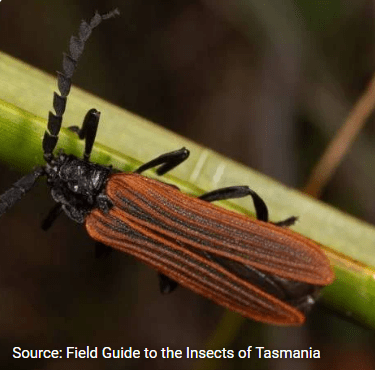
N – Net-winged Beetle: “A distinct family of beetles recognized by their bright, net-like wing patterns.” This one is news to me. I have never heard of or seen this bug. Thanks to the Field Guide to the Insects of Tasmania.
O – Owl Butterfly: “A large butterfly featuring giant, owl-eye patterns on its wings to scare off predators.” I would never want to encounter this butterfly. It would scare me because it is just too creepy. I already do not like owls!
P – Praying Mantis: “A carnivorous insect that stays perfectly still with its front legs folded as if in prayer.” While this is a bug, I think it is a cute bug, likely because of the praying hands. I think about them every time I see a stick bug because of how it blends in with the leaves that I usually see it on. Manny is a fitting name for a praying mantis.
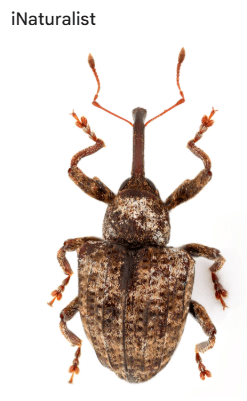
Q – Quince Curculio: “A native North American snout beetle (weevil) that targets pomes and stone fruits. Adult females drill deep holes into developing fruit to feed and lay eggs. The emerging larvae tunnel into the fruit center, causing premature drop, interior rot, and severe cosmetic damage.” Thanks to iNaturalist.
R – Rhinoceros Beetle: “One of the strongest animals on earth, known for the large horn on its head.” This is a fitting name since they have a horn like a rhinoceros. Dim is a rhinoceros beetle! I am excited to discover this! I always wondered what type of beetle he was.
S – Stick Insect: “An incredibly long insect that has evolved to perfectly blend in with twigs and branches.” I have nearly missed seeing the stick bug on an actual stick. They are very good at camouflage! I am glad Slim was not blending in since he worked for the circus.
T – Termite: “Wood-eating insects that live in large, tower-building colonies.” I have seen termites and the damage they cause. I never in my life want to ever see one again, especially not a queen! The first time I saw one in person, I did not realize what it was because I was not expecting wings! Apparently, I had encountered reproductive termites, or swarmers. Gross!
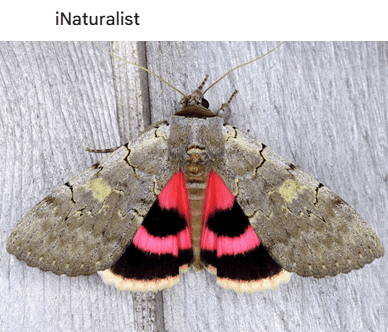
U – Underwing Moth: “A moth whose vibrantly colored hindwings are hidden until it flashes them to startle predators.” This one looks a little weird. I have never seen anything like it. Thanks to iNaturalist.
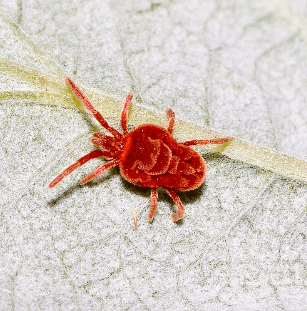
V – Velvet Mite: “A tiny, fuzzy, and bright red creature often found crawling in the soil.” This bug literally looks like velvet! Thanks to Wikipedia for the image.
W – Wasp: “A flying insect that can be an aggressive defender of its nest but is also crucial for pollination and pest control.” Even if you are nowhere near the wasp nest, they will come for you! Beware! I cannot count how many wasp nests I have seen in my lifetime.
X – Xylophagus Beetle: “A type of beetle whose larvae live inside and consume dead wood. Xylophagous is an adjective describing any insect that feeds primarily on wood.” The larvae living inside sounds a bit gross. Since this is not specific to a single bug, I will not provide an image.
Y – Yellowjacket: “A highly aggressive, predatory wasp known for its bright black and yellow stripes.” The famous yellowjacket is a dangerous bug for a lot of people who are allergic to its sting. I don’t think I have ever been stung by a bee, but my son was one time and we learned that he is allergic.
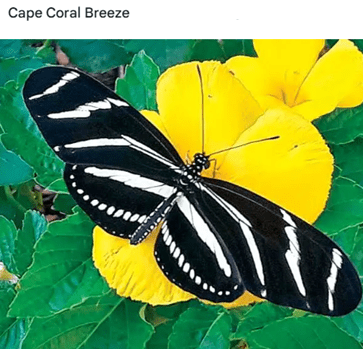
Z – Zebra Butterfly: “A butterfly (or zebra longwing) recognized by its striking black and white striped patterns.” This bug literally looks like a zebra. If it was on the back of a zebra, you would not see it! I have to add a photo of this one! Thanks to Cape Coral Breeze.
I hope you enjoyed this post about different bugs. If you want to see images of the ones I did not include, let me know in the comments below.

